EcoClarity joins Future Humber and the Bondholders network

EcoClarity Kitchen Waste Disposal

We are excited to share that Eco Clarity has joined Future Humber and the Bondholders network, a vibrant community of businesses committed to driving economic growth and sustainability in the Humber region. This marks an exciting new chapter as we continue to expand our innovative solutions for managing FOG waste.

With plans to expand to 20–30 FOG Recovery Hubs over the next three years, we have already identified several potential sites and are currently collaborating with Yorkshire Water on a hub in Hull. Our goal is to partner with businesses across the Humber region who are seeking more sustainable ways to manage their FOG waste.

“Joining the Bondholder scheme perfectly aligns with our mission to lead innovation in sustainable waste management,” says Laura Su, Business Development at Eco Clarity. “By expanding our network of FOG Recovery Hubs and collaborating with ambitious partners, we aim to transform how fat, oil and grease waste is managed across the Humber region. Together, we can drive a greener, more sustainable future and reward our partners with verified carbon savings, showcasing their commitment to the environment.”

EcoClarity Kitchen Waste Disposal

Improper handling of FOG waste can be highly destructive, leading to blocked sewer networks, flooding, environmental pollution and increased GHG emissions. Eco Clarity’s innovative approach offers a unique solution that transforms waste into a valuable resource, creating a circular economy that benefits multiple stakeholders, including utilities, industry, hospitality, waste management, society and the environment.

We are excited about the opportunities this brings and look forward to working with like-minded businesses to achieve a more sustainable future.

We are excited about the opportunities this brings and look forward to working with like-minded businesses to achieve a more sustainable future.

Kitchen Waste Disposal Transformed by Radical Innovation

EcoClarity Kitchen Waste Disposal

A ground-breaking circular economy approach to wastewater management, using a patented technology that separates problematic fat, oil, and grease (FOG) from wastewater, has been developed by engineering technology company Eco Clarity.

The UK-headquartered company is recovering a valuable energy resource for biodiesel production, while returning safe water to the environment. The model involves placing hubs at wastewater treatment sites, where hauliers can offload grease trap waste collected from food service establishments (FSEs) and food processing sites, and utilities can process their own waste streams.

It benefits haulage companies by reducing the number of tanker trips and the distances involved in disposing of a challenging waste stream. For utilities, wastewater quality is improved before discharge and blockages caused by a buildup of FOG (known as fatbergs) are reduced. Meanwhile, a feedstock for renewable energy is generated.

EcoClarity Kitchen Waste Disposal

Eco Clarity’s Latest FOG Recovery Hub in Hull.

The Technology

Eco Clarity’s Eco-Ceptor separates FOG into safe water, reusable solids, and FOG for biodiesel. It processes large volumes efficiently and tracks carbon credits for responsible disposal.


FOG Recovery Hubs

Eco Clarity’s hubs are large-scale waste conversion units strategically located near wastewater treatment plants or private waste sites. These fully mobile and automated hubs intercept and filter over 150000 litres of grease trap waste daily, with the capacity to scale-up as needed.

The patented technology filters oil residues from wastewater. Captured FOG is converted into eco-friendly biodiesel, while water can be safely reused by water utilities. Boasting a 90% reduction in greenhouse gas emissions, biodiesel contributes to climate change mitigation and could be used to power tankers transporting wastewater – creating a tight circular economy of value.

Eco Clarity’s hubs process around 10 tonnes of FOG-laden water in 10 minutes, separating and harvesting FOG within 30 minutes, using just 25% of the energy typically required, with low-temperature operation (under 60°C) for minimal energy consumption.

FOG Recovery Hubs</p> <p>EcoClarity’s hubs are large-scale waste conversion units strategically located near wastewater treatment plants or private waste sites. These fully mobile and automated hubs intercept and filter over 150000 litres of grease trap waste daily, with the capacity to scale-up as needed.<br /> The patented technology filters oil residues from wastewater. Captured FOG is converted into eco-friendly biodiesel, while water can be safely reused by water utilities. Boasting a 90% reduction in greenhouse gas emissions, biodiesel contributes to climate change mitigation and could be used to power tankers transporting wastewater - creating a tight circular economy of value.<br /> EcoClarity’s hubs process around 10 tonnes of FOG-laden water in 10 minutes, separating and harvesting FOG within 30 minutes, using just 25% of the energy typically required, with low-temperature operation (under 60°C) for minimal energy consumption.</p> <p>Focus on Hauliers</p> <p>EcoClarity’s revolutionary approach to grease trap waste (GTW) disposal, puts hauliers at the forefront of efficiency, sustainability, and cost-effectiveness.<br /> Highly efficient disposal at Argent Energy’s refinery at Stanlow in Cheshire, and Hull, Yorkshire, UK, minimises travel distances for hauliers reducing fuel consumption, lowering operating costs, and increasing time spent serving customers. Additionally, a new site in Stockport opens in August 2024.<br />
EcoClarity Kitchen Waste Disposal

Focus on Hauliers

Eco Clarity’s revolutionary approach to grease trap waste (GTW) disposal, puts hauliers at the forefront of efficiency, sustainability, and cost-effectiveness.

Highly efficient disposal at Argent Energy’s refinery at Stanlow in Cheshire, and Hull, Yorkshire, UK, minimises travel distances for hauliers reducing fuel consumption, lowering operating costs, and increasing time spent serving customers. Additionally, a new site in Stockport opens in August 2024.

The Future

Eco Clarity’s next-generation wastewater plants are ready for production. The company is exploring biodiesel-powered units and further research in South Africa on compact FSE dedicated plants.

Alongside UK water utilities, there is significant interest from Europe, the Middle East, India, and Asia. Eco Clarity anticipates deployment of around 40 plants across the UK and Europe by 2026.

EcoClarity Kitchen Waste Disposal

Partnerships drive FOG-to-fuel circular economy

Sewer blockages due to the impact of fats, oils, and grease (FOG) in wastewater systems is a major environmental challenge, but innovative waste management partnerships are delivering effective solutions, says Chris Clemes, chief executive of engineering technology company, Eco Clarity and Rob Menzies, managing director of Serious Waste Management.

Fats oils and grease – otherwise known as FOG – are common byproducts of restaurants and food processing facilities, but FOG disposal has long posed a challenge.

Currently too much FOG enters the sewers and drains, where it often results in blockages, which can significantly impact the public, the environment, and be costly to clear. The alternative is landfill disposal, which fails to capitalise on the value of FOG as a potential renewable fuel source.

EcoClarity and Serious Waste at FOG Recovery Hub in Hull.

Closing the loop

The ongoing success of this proven solution relies heavily on close collaboration. Eco Clarity’s work with waste services contractor Serious Waste Management exemplifies the power of partnerships in unlocking a FOG-to-fuel circular economy, now and into the future.

“Grease trap waste can be recycled into biodiesel, which can then be used to power vehicles and other equipment. This closes the loop on the waste stream and reduces reliance on fossil fuels,” explains Rob Menzies, managing director, Serious Waste Management.

“Collaborating on FOG recovery and reuse is a win-win situation for businesses, hauliers, the water sector and the environment. It promotes resource recovery, reduces landfill waste, creates a closed-loop system, and contributes to a more sustainable wastewater management system.”

Chris Clemes, founder and chief executive of Eco Clarity continues, “Once the waste is in our recovery hub and has been quantified and verified, we can calculate greenhouse gas emissions for FSEs and other businesses who have provided their FOG. It’s not only reducing cost and greenhouse gas emissions, our partnership with Serious Waste underscores the importance of proper FOG disposal and means we can reward responsible businesses.”

Cutting carbon

As Eco Clarity sites are registered with Argent Energy’s Carbon Certification Scheme, the company can track the volume of greenhouse gas (GHG) emissions saved by the biodiesel produced from its FOG feedstock. This allows companies to demonstrate their commitment to sustainability and attract environmentally conscious clients and investors.

Boasting up to a 90% reduction in GHGs, biodiesel contributes to climate change mitigation and could be used to power tankers transporting wastewater – creating a tight circular economy of value.

Data capture

Historically, most organisations have lacked the specialised data and techniques needed to evaluate how much FOG is present in their tanker loads, explains Clemes.

“Eco Clarity analyses every load that comes into our hubs, so we know the precise mass and FOG content. As the FOG-rich waste goes through our mass meter, we can quantify it, and share the data with the client – supporting their green ambitions with robust data.”

Using the Eco Clarity data, Serious Waste Management has saved around 47,000 tonnes of GHG emissions since they began working with Eco Clarity two years ago.

Eco Clarity Site Operator at FOG Recovery Hub in Hull.

Smoother sewers

Sewer blockages are a major concern in the UK, with an estimated 200,000 occurring annually, and FOG cited as the cause in around 75% of cases. A build-up of FOG hinders the smooth operation of sewer systems and wastewater treatment plants (WwTPs), shortens the lifespan of critical assets and increases maintenance costs.

This burden ultimately falls on water companies, which may be forced to raise prices for customers. Additionally, FOG blockages can cause sewer overflows, creating a public health hazard and impacting the environment.

Eco Clarity is growing a network of FOG Recovery Hubs across the UK, with plans to scale to 20-30 sites in the next three years.  Multiple potential sites have been identified, and the company is currently working on a FOG Recovery Hub in Hull, in collaboration with Yorkshire Water. Sites belonging to United Utilities and Southern Water, as well as two large entertainment venues in London and Cornwall, are also in the pipeline.

Planning for the future

Meeting the pace of increasing demand for FOG disposal sites is currently hindered by environmental permit issues, with the process taking up to two years. Eco Clarity is engaging with the Environment Agency to tackle the issue and find ways to streamline permit applications.

Clemes explains, “The permit process needs modernisation. We want to provide FOG recovery across multiple locations, before grease builds-up in sewers, but delays in obtaining permits is a major hurdle.”

“More geographically dispersed sites are needed,” adds Menzies. “Collaboration within the water sector to find sites will help water companies meet environmental targets and reduce haulier travel times and costs.”

FOG-fired fuels gain momentum


The energy potential of FOG waste from homes, restaurants and sewers is well known, and technologies and projects that capture and reuse this valuable resource are now coming into play.

Eco-Clarity, an London-based company with a manufacturing facility in South Africa , has developed a revolutionary technology for the recovery of FOG.

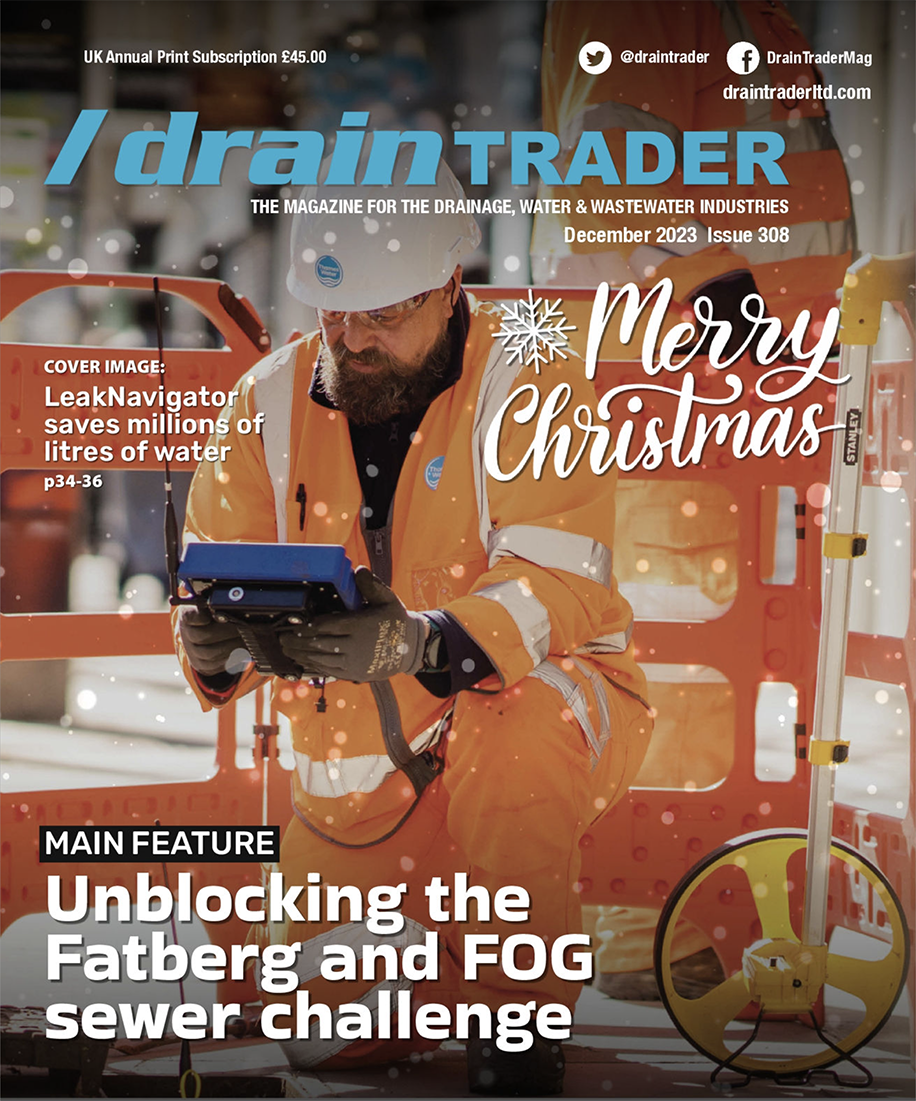
See pages 4-8 for Drain Trader’s December issue.


Click Here to Read more: Drain Trader December 2023 Issue

Eco Clarity – Circular Economy


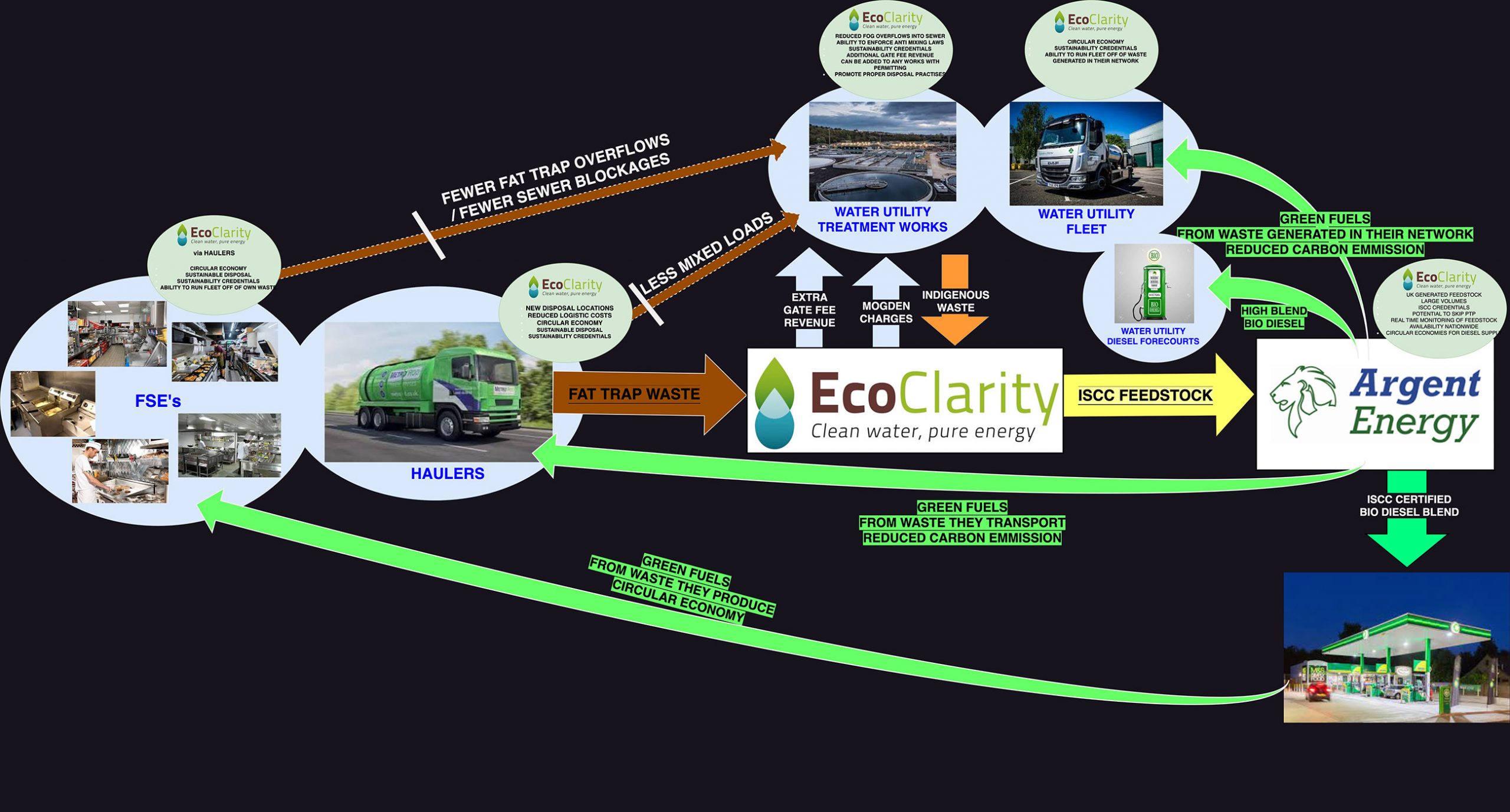
Eco Clarity has developed a revolutionary technology for the recovery of Fats, Oils and Grease (FOG) generated by Food Service Establishments (FSE’s). Eco Clarity’s FOG Consolidation Hubs provide accessible disposal locations for haulers to sustainably dispose of FOG containing wastewater before it enters the sewer network or waste water treatment works, where it can be a major cause of blockages, spills and reactive and costly clean-up operations.

Eco Clarity is able to consolidate the FOG present in this waste into a feedstock suitable for Bio Diesel production, which is then blended with the Diesel available at all service stations. This enables FSE’s, Haulers and Water Utilities who use Eco Clarity’s FOG Consolidation Hubs for disposal of their waste, the ability to create a circular economy, by running their diesel cars and trucks on the waste that they generate.

Eco Clarity is excited to be working with Southern Water to launch this service in the next 12 months.

Chat to us:

Our Awards:

Winner Innovation of the Year.

Winner of the Sustainability category.

Contact us:

General enquiries: +44 (0) 203 925 3540

Registered address: 36 Scotts Road, Bromley, BR1 3QD, United Kingdom.

Quick Links:

Food manufacturers

Book FOG disposal slot

FOG Recovery Hubs

Liquid waste carriers

Wastewater treatment plants

Food service establishments

Private waste sites

Biofuel consumers

Environment

Partners

Privacy Policy

Brighton buses could be powered by sewer fat biofuel

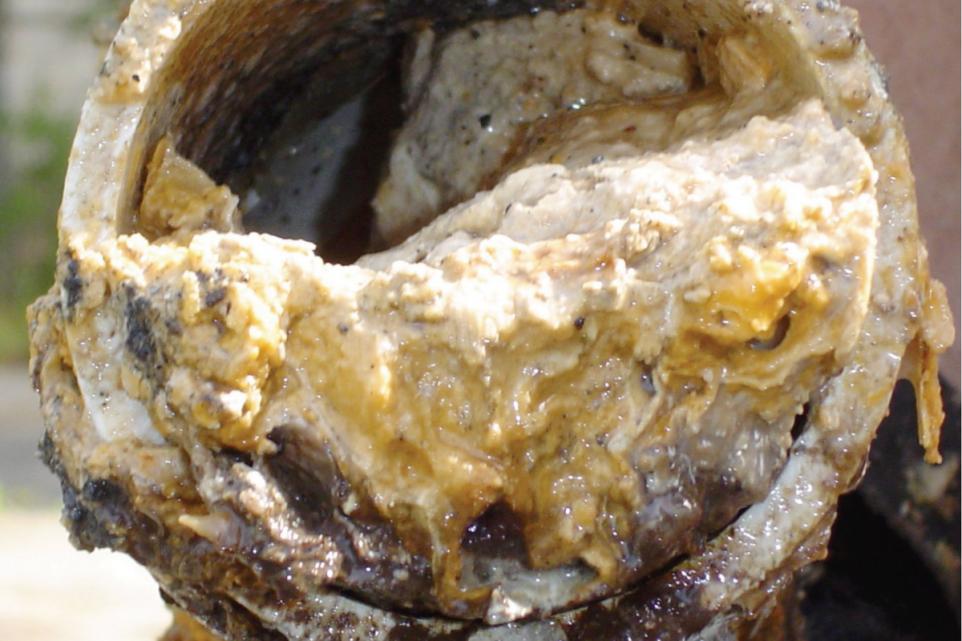
Fat clogging a sewer pipe (Image: Southern Water)

By Zac Sherratt @SherrattZac Digital Reporter

A water company hopes to use the fat which usually clogs its sewer network to power buses in the city.

Fat, oil and grease (FOG) from participating food outlets in Brighton and Hove will be delivered to Southern Water’s treatment works where it will be mixed with FOG removed from wastewater and turned into a biofuel.

The company is targeting restaurants which collect FOG in their fat traps, rather than pouring it down the sink, which it says will expose those not using the traps, leaving them open to prosecution.

Stephen Williams, Southern Water’s network protection and enforcement officer, said: “FOG is a real curse for sewers.

“It’s a major cause of blockages and resulting pollution, but it’s also a resource.

“Getting usable oil out of the 51 million litres of wastewater that pours into Peacehaven every day, along with collections from businesses, and turning it into a useful fuel would benefit all of us and the planet.”

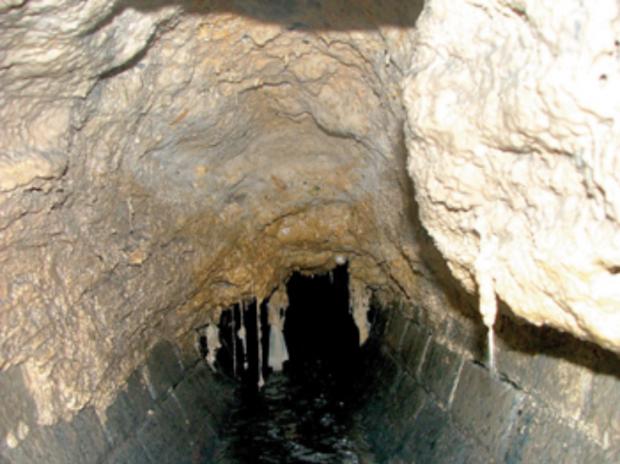
Fat clings to the inside of sewer walls (Image: Southern Water)

The project, which will use a waste conversion system from green technology company Eco-Clarity, could begin “as early as next year”.

And if the scheme works, it could be rolled out across the entire Southern Water network region.

Christopher Clemes, chief executive and co-founder of Eco Clarity, said: “We have developed a revolutionary technology for the recovery of FOG generated by food service establishments (FSEs).

“Eco Clarity’s FOG consolidation hubs provide accessible disposal locations for haulers to sustainably dispose of FOG containing wastewater before it enters the sewer network or waste water treatment works, where it can be a major cause of blockages, spills and costly clean-up operations.

READ MORE: Southern Water told to pay out almost £30 million

“Eco Clarity is able to consolidate the FOG present in this waste into a feedstock suitable for bio-diesel production, which is then blended with the diesel available at all service stations.

“This enables FSEs, haulers and water utilities who use Eco Clarity’s FOG consolidation hubs for disposal of their waste the ability to create a circular economy, by running their diesel cars and trucks on the waste that they generate.”

The company is hoping that bus companies will be interested in using the biofuel. Brighton and Hove Buses has told The Argus that there are currently no plans to use it.

Nick Hill, commercial director at the bus company, said: “We have no plans to use these particular biofuels currently, but we are always open to new ways of reducing our emissions.”

Call Now Button